
WELCOME BONUS 200%
up to €1500 + 200
FREE SPINS
up to €1500 + 200
FREE SPINS
Home → Blackjack
Blackjack at Talismania Casino: Variants, Rules and Payouts
Live Table vs RNG Table: Speed and Limits
Live dealer games like Quantum Blackjack Plus Live from Playtech operate with a betting range from 1 EUR to 5,000 EUR. This limit is significantly higher than some RNG tables, allowing for larger stakes in a real-time environment. Such higher limits can impact the progression of wagers within a single session.
In contrast, standard RNG Blackjack tables, such as Blackjack 6 Decks with a basis strategy, typically have lower maximum bet limits, often around 1,000 EUR for games like Blackjack Party. The speed of play on RNG tables is generally faster than live dealer games, as there are no human dealers to manage. This accelerated pace can lead to more hands played per hour.
The inclusion of features like Quantum multipliers up to 1,000x on 3-card 21s in Quantum Blackjack Plus Live can introduce volatility. While the RTP for Quantum Blackjack Plus Live is 99.57% with optimal strategy, these multipliers are applied to specific winning combinations, not the base game payout. This creates a different risk-reward dynamic compared to standard RNG blackjack.
Why Loss Progression Quickly Reaches Table Limit
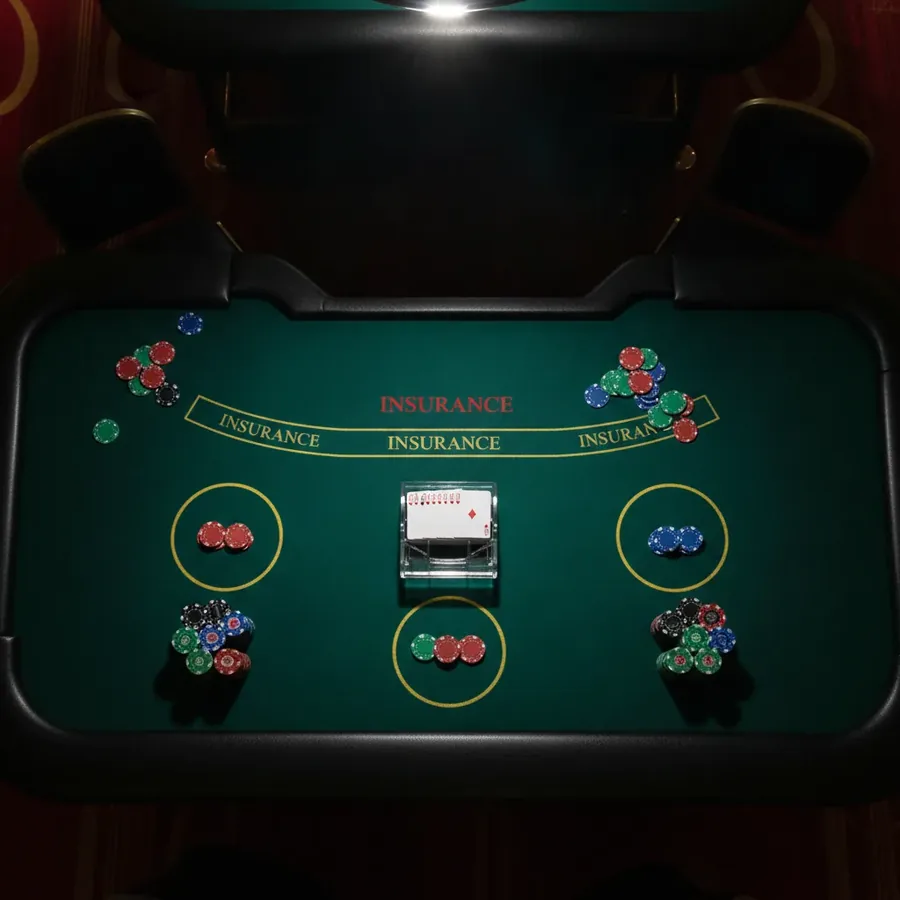
Certain side bets in blackjack can drastically increase the house edge. For example, Blackjack Insurance, when played on 6-8 decks, presents a house edge of 7.47%. This is substantially higher than the base game's house edge, making it more likely for a player to experience rapid losses if consistently placing this bet.
Games with a low RTP and high house edge, such as Blackjack with a 6:5 payout instead of 3:2, exacerbate loss progression. A 6:5 payout increases the casino's advantage by approximately 1.39 percentage points, resulting in an 1.85% house edge. This means for every 10 EUR bet, a blackjack payout is 12 EUR instead of 15 EUR.
The impact of a high house edge on a consistent betting strategy becomes evident quickly. If a player consistently bets 50 EUR on a table with a 7.47% house edge, the theoretical average loss per hand is 3.73 EUR. Over multiple hands, this steady drain can rapidly deplete a bankroll and approach table limits.
What a Natural Blackjack Practically Pays Out
A natural Blackjack, achieved with the first two cards dealt totaling 21, typically pays out at odds of 3:2. For instance, on a 10 EUR bet, a natural Blackjack yields 25 EUR (10 EUR stake + 15 EUR winnings). This payout structure is a fundamental aspect of the game's standard rules.
However, some blackjack variants, like the Blackjack 6:5 payout example, significantly reduce this payout. In such cases, a 10 EUR bet on a natural Blackjack would only return 22 EUR (10 EUR stake + 12 EUR winnings). This reduction directly increases the house edge by approximately 1.39 percentage points.
The Blackjack Liberal Vegas Strip variant, with an RTP of 99.72% and a house advantage of 0.28%, offers the most favorable payout of 3:2 for a natural Blackjack. This combination of rules, including S17, DAS, Resplit, and Late Surrender, is considered optimal for players seeking the best possible return on their wagers.
Bonus conditions often exclude Blackjack completely
The welcome bonus of 300% up to €2,000 plus 100 free spins is subject to specific wagering requirements. These requirements dictate how much a player must bet before bonus funds and winnings can be withdrawn. Understanding these conditions is crucial for any player planning to utilize the bonus.
Blackjack games, both live and RNG-based, often contribute minimally or not at all to the wagering requirements of bonuses. For example, table games typically contribute only 10% to bonus turnover. This means a player would need to wager significantly more on blackjack to meet the same requirement as slots, which contribute 100%.
To convert the 300% welcome bonus, which can be up to €2,000 on a deposit of €666.67, into withdrawable cash, a player must clear the wagering. If the wagering is set at 40x the bonus amount, a player receiving the maximum €2,000 bonus would need to wager €80,000 (2,000 € x 40). With a 10% contribution from blackjack, this would necessitate €800,000 in blackjack wagers.
Side Bets Increase House Edge to 5 Percent
Side bets can introduce significantly higher house edges compared to the main blackjack game. For instance, Blackjack Insurance, a common side bet, carries a house edge of 7.47% when played with 6-8 decks. This is substantially higher than the base game's advantage, which can be as low as 0.15% for Blackjack Ein Deck.
The rule modifications in various blackjack variants also affect the house edge. For example, the Blackjack 6 Decks, S17, DAS variation has a house edge of 0.46%. However, if the payout for a natural Blackjack is changed from 3:2 to 6:5, the house edge increases by approximately 1.39 percentage points to 1.85%.
When considering games with amplified payout potential, such as Quantum Blackjack Plus Live with its multipliers, the base game mechanics still dictate the overall house edge. The RTP of 99.57% is based on optimal play, and while multipliers offer potential for larger wins, they are applied to specific outcomes, not the fundamental game's statistical advantage.
Blackjack variants at a glance
| Variant | Payout | House edge | Rule | Bet range |
|---|---|---|---|---|
| Blackjack Insurance / Versicherung (6–8 Decks) | 92.53% | 7.47% | Separate Nebenwette bis 50% der Hauptwette, wenn der Dealer ein Ass hat. Basisstrategie schreibt IMMER Ablehnung vor (außer Karten zählen bei True Count ≥ +3). Bei einem Deck Vorteil ≈ 5.88% | Insurance 2:1 |
| Blackjack Liberal Vegas Strip (liberale Regeln, 3:2) | 99.72% | 0.28% | Günstigste Regelkombination: S17 + DAS + Resplit + Late Surrender. Standardabweichung 1,15 | Blackjack 3:2, Gewinn 1:1 |
| Blackjack Split / Double / H17 – Regel-Effekte | n.a. (Regel-Modifikatoren) | H17 +0.22 Prozentpunkte; RSA −0.08 Prozentpunkte; DAS −0.14 Prozentpunkte | Dealer Hits Soft 17 verschlechtert RTP um 0.22 Prozentpunkte; Resplit Aces verbessert um 0.08 Prozentpunkte; Double After Split verbessert um ca. 0.14 Prozentpunkte; 6 Decks statt 8 – ca. 0.02 Prozentpunkte. | Double – Einsatz ×2 mit einer Karte; Split – bis 4 Hände; Ass-Split meist mit einer Karte. |
| Blackjack 6 Decks, S17, DAS, DOA, Auszahlung 3:2, Basisstrategie | 99.54% | 0.46% | Dealer steht auf Soft 17; Verdopplung auf jeder Zweierkarte; Verdopplung nach Split erlaubt; keine Aufgabe. Basisstrategie ist für diesen Wert zwingend | Blackjack 3:2, normaler Gewinn 1:1, Insurance 2:1 |
| Blackjack Auszahlung 6:5 statt 3:2 (6 Decks) | 98.15% | 1.85% | Ersatz von 3:2 durch 6:5 fügt exakt +1.39 Prozentpunkte zum Vorteil des Casinos hinzu – stärker als jede andere Regeländerung. Bei $10 Einsatz zahlt Blackjack $12 statt $15. | Blackjack 6:5, Gewinn 1:1 |
| Blackjack Ein Deck, klassische Regeln, 3:2 | 99.85% | 0.15% | Weniger Decks = niedrigerer Vorteil; ein Deck gibt ca. −0.48 Prozentpunkte gegenüber 8 Decks. Oft durch 6:5 Auszahlung kompensiert. | Blackjack 3:2, Gewinn 1:1 |
Six Decks to Eight Decks in the Shoe
The number of decks used in a blackjack shoe directly impacts the house edge. A game with six decks, offering a 3:2 payout for blackjack, presents a house advantage of 0.46% when played with a basic strategy. This is calculated based on various rule sets, including standing on soft 17 and allowing double after split.
In contrast, using eight decks in the shoe, while keeping other rules identical, leads to a marginal increase in the house edge by approximately 0.02 percentage points. While this difference may seem small, over extended play, it can accumulate. For instance, the difference between 6 decks and 8 decks is less impactful than a payout reduction from 3:2 to 6:5.
The deviation in house edge between a six-deck and an eight-deck shoe, even with identical rules like 3:2 payouts and standard strategy, can represent a difference in potential returns for the player. For a $10 bet, a 0.02% difference translates to a slight variation in expected loss over thousands of hands played at a table like Blackjack 6 Decks, S17, DAS, DOA.
Which rule variants does the software show?
The software offers several rule variants that influence the player's advantage, such as the option for 'Late Surrender' in Blackjack Surrender. This rule allows a player to forfeit their hand after the dealer checks for blackjack, losing half their stake, and it reduces the house advantage by approximately 0.08 percentage points.
Another beneficial variant is 'Double After Split' (DAS), which improves the player's RTP by about 0.14 percentage points, allowing for doubling down on a split hand. Coupled with rules like 'Split Aces' (RSA), which improves RTP by 0.08 percentage points, these liberal configurations are found in games like Blackjack Liberal Vegas Strip.
However, less favourable rules can also be present, such as the dealer hitting on a soft 17 (H17). This specific rule increases the house advantage by 0.22 percentage points, a significant factor in the overall game odds. Players seeking the best odds should look for variants that avoid this rule, prioritizing games with a 3:2 blackjack payout.
Blackjack Party runs with two hosts
Blackjack Party, a live dealer variant offered by Evolution, differentiates itself by featuring two hosts managing the game and interacting with players. This format is designed to create a more engaging and social atmosphere compared to standard live blackjack tables. The betting range for this game is from €1.00 to €1,000.
While the hosts create a lively environment, the underlying game mechanics remain similar to other live blackjack offerings. Players can still expect standard blackjack rules, with the primary distinction being the entertainment factor provided by the dual presenters. The game does not feature the multiplier mechanics seen in games like Quantum Blackjack Plus Live.
The presence of two hosts on Blackjack Party aims to enhance player enjoyment and keep the conversation flowing, making it a popular choice for those who prefer a more interactive live casino experience. The high betting limit of €1,000 per hand accommodates a wide range of players seeking this engaging format.
16 vs 10 played incorrectly: most common error
A frequent strategic misstep observed at blackjack tables involves players incorrectly playing a hand of 16 against a dealer's upcard of 10. Basic strategy dictates that a player should hit on a 16 when the dealer shows a 10, as the dealer is statistically likely to form a strong hand.
Failing to hit on 16 versus a 10 significantly increases the house edge. For example, consistently choosing to stand on 16 against a dealer's 10, rather than hitting, elevates the casino's advantage beyond the standard figures associated with games like Blackjack 6 Decks, S17, DAS, DOA, which has a 0.46% house edge.
Adhering to basic strategy, such as hitting 16 against a 10, is crucial for minimizing losses over time. For instance, the RTP for Blackjack Ein Deck with classic rules is 99.85%, but this is contingent on optimal play, which includes correct decisions on all hands, not just simple ones.
Insurance Pays 2:1 Yet Still Costs Money
The insurance side bet, available when the dealer's upcard is an Ace, offers a payout of 2:1. This bet allows players to wager up to 50% of their original bet against the dealer having blackjack. While the 2:1 payout might seem attractive, it carries a substantial house advantage.
For a typical game played with six to eight decks, the house edge on the insurance bet is approximately 7.47%. This is significantly higher than the house edge on most main blackjack hands, which can be as low as 0.15% for Blackjack Ein Deck. Basic strategy universally advises against taking insurance.
The only exception to avoiding insurance is for card counters who identify a true count of +3 or higher, a scenario where the remaining deck composition is favourable. Otherwise, consistently taking insurance in games like Blackjack Insurance, even with a 2:1 payout, predictably erodes a player's bankroll over the long term.
Six Card Charlie Pays Immediately with Six Cards
The "Six Card Charlie" rule in Blackjack, as seen in some variants, grants an immediate payout when a player achieves a total of six cards without busting. The objective is to reach six cards without exceeding 21, a challenge that requires careful play and a favourable distribution of card values.
It is a deviation from the typical win condition of beating the dealer's hand or achieving 21. The presence of such a rule, even without explicit RTP figures, can influence player decisions and potentially lower the house edge for those who master its strategic implications.
Players aiming to leverage the "Six Card Charlie" should be aware that its payout mechanism is immediate and unconditional, provided the six-card condition is met without busting. This offers a different avenue for winning compared to traditional blackjack outcomes, potentially impacting the overall risk-reward calculation for players engaging with such variants. The absence of specific RTP data for this rule necessitates a reliance on general strategic understanding.
No Double Down on three cards
Certain Blackjack variants, such as those with a "No Double Down on three cards" rule, restrict the player's ability to double their bet after receiving their initial two cards if they have already been dealt a third card. This rule directly impacts strategic decisions, particularly in scenarios where doubling down would typically be advantageous. For instance, in a "Blackjack 6 Decks, S17, DAS, DOA" game, the "Double After Split" (DAS) rule might still apply, but the general double down after three cards is not permitted.
The absence of the double down option on three cards can increase the house edge compared to games where this flexibility is allowed. While "Double After Split" (DAS) contributes approximately 0.14 percentage points to the player's advantage, the restriction on doubling down after a third card negates potential strategic plays. This means players cannot capitalize on favourable upcards from the dealer when their hand value is strong but comprises three cards.
This specific rule modification directly affects player strategy and the potential for favourable outcomes. Players must adapt their approach, as doubling down on a three-card hand is no longer an option, unlike in games that permit it. Understanding these rule variations is crucial for players seeking to optimize their gameplay, as it influences the optimal strategy and the inherent house advantage in each Blackjack variant.
When can you increase your bet?
The ability to increase bets in Blackjack is primarily governed by the game's rules regarding doubling down and splitting pairs. For example, in a "Blackjack 6 Decks, S17, DAS, DOA" variant, players can double their bet on any initial two-card hand (Double Down) and also after splitting a pair (Double After Split - DAS). These actions allow for an increase in bet size based on favourable hand compositions and dealer upcards.
Live Blackjack variants like "Quantum Blackjack Plus Live" offer a broad betting range from 1 to 5,000 EUR, and "Lightning Blackjack" allows bets from 1 to 2,500 EUR, providing significant scope for increasing stakes within a single hand. The "Quantum" feature in "Quantum Blackjack Plus Live" introduces multipliers up to 1,000x on specific 21 combinations, implying potential for greatly increased returns but not directly on the bet size increase itself.
The option to increase a bet is inherently tied to specific gameplay mechanics such as doubling down and splitting, as well as the overall betting limits of the table. In games like "Blackjack Liberal Vegas Strip", which features liberal rules including "Double After Split" (DAS), players have more opportunities to strategically increase their bet. The maximum bet limit on tables, such as 5,000 EUR in "Quantum Blackjack Plus Live", sets the upper boundary for any increased stake.
Error insurance: 7 percent additional house edge
Blackjack Insurance is a side bet offered when the dealer's upcard is an Ace, allowing players to bet on whether the dealer has Blackjack. With a typical RTP of 92.53% for "Blackjack Insurance / Versicherung" in a 6-8 deck game, this bet carries a substantial house edge of 7.47%. This is significantly higher than the main game's typical house edge when played with basic strategy.
The "Blackjack Insurance" side bet functions as a separate wager that pays 2:1 if the dealer achieves Blackjack. However, basic strategy dictates that this bet should always be declined unless card counting indicates a true count of +3 or higher. Even in a single-deck scenario, where the advantage might decrease to approximately 5.88%, it remains a disadvantageous bet for most players.
The high house edge of 7.47% associated with Blackjack Insurance means that for every 100 EUR wagered on this side bet, players can expect to lose an average of 7.47 EUR over the long run. This substantial deviation from the main game's RTP makes it a costly option for most players, significantly increasing the overall house advantage when taken.
Highroller from 500 EUR per hand
For high-stakes players, "Quantum Blackjack Plus Live" offers a betting range starting from 1 EUR up to 5,000 EUR per hand. This upper limit of 5,000 EUR accommodates players who prefer to place substantial wagers on each hand, aligning with the characteristics of a highroller. The game's inclusion of "Quantum multipliers" up to 1,000x on specific 21 combinations also appeals to those seeking potentially massive returns on their significant investments.
"Lightning Blackjack" also caters to a high-stakes clientele, with a betting range extending up to 2,500 EUR per hand. While this is lower than "Quantum Blackjack Plus Live," it still provides a significant platform for players willing to commit substantial funds to each game round. The "Lightning multipliers" of up to 25x on winning hands can further amplify the returns on these larger bets.
The presence of tables with maximum bets of 5,000 EUR, as seen in "Quantum Blackjack Plus Live," clearly defines the environment for highrollers. This high betting limit per hand allows players to significantly increase their exposure on individual rounds, making it suitable for those with substantial bankrolls seeking to play at the highest stakes available on the platform. The structure supports wagers well above a 500 EUR threshold.
Contact
Live - online chat
Banking









Providers












Talismania casino 2024